How to Get Rid of Pelvic Pain
By Dr. Julie Pettit-Lane
Pelvic pain is such a... pain. While it can present in a variety of ways, it usually affects a person's daily life and/or training. Pain itself is often misunderstood, and pelvic pain is even more mystifying. It can often be misdiagnosed or written off entirely. I've had a patient or two tell me a doctor recommended having a glass of wine before the aggravating activity (intercourse, in this case).
Pelvic pain is common in athletes: from cycling, running, CrossFit, and more. The good news is you don't have to live with it!
What Causes Pelvic Pain
Pelvic pain is complex. There are numerous presentations, including pain with intercourse (insertional pain, deep pain, pain with erection, pain with ejaculation, pain with orgasm), pain with insertion (penile, tampon, speculum), pain at the vulva without a clear trigger, scrotal pain, groin pain, pubic symphysis pain, and others. There are also "pelvic-adjacent" pains including sacroiliac joint pain, low back pain, coccyx pain, and deep hip pain. And this isn't an all-inclusive list.
With this much variety under the term "pelvic pain," it's impossible to identify one clear trigger. But there tends to be a common theme: pelvic floor dysfunction. What does this mean? Simply put, the function, or movement, of the pelvic floor is lacking. In the case of pain, this most often (but not always) trends toward an overactive pelvic floor, where the muscles can contract and are strong, but do not fully relax.
This often presents as part of a larger system. The pelvic floor isn't moving well, breathing patterns may be different (which directly impacts pelvic floor movement), and posture may be different too, either with overclenched glutes and a posterior pelvic tuck, or with the core drawn in constantly, creating an overflow of gripping and holding at the pelvic floor.
At times, pelvic pain results from direct stress and compression at the pelvic floor. The most common example is pudendal neuralgia in cyclists, where sitting on the saddle compresses the pudendal nerve, creating pelvic pain.
When looking for a driver of pelvic pain, we always assess the movement, mobility, and strength of the hips and low back. A limitation in any of these areas can increase strain and demand on the pelvic floor, resulting in pelvic pain.
Common Mistakes People Make
The biggest mistake I see clinically is ignoring symptoms. Often, something started months or even years ago, and the person tried to self-resolve it by resting, avoiding the aggravating activity, or finding random exercises online that didn't address the true driver of their symptoms. The hesitation to seek specialized care is understandable: wait times can be long, and the cost of care can be expensive. But too often I see people who once described their symptoms as "something I feel sometimes" or "something I feel only five miles into a run," and by the time I see them, they're telling me, "I can't walk more than 10 minutes before I need to stop," or "I can't drive more than 10 minutes because the pain is too great." While improvement is still possible at this point, the journey can be longer than if symptoms were not ignored initially.
How to Fix Pelvic Pain
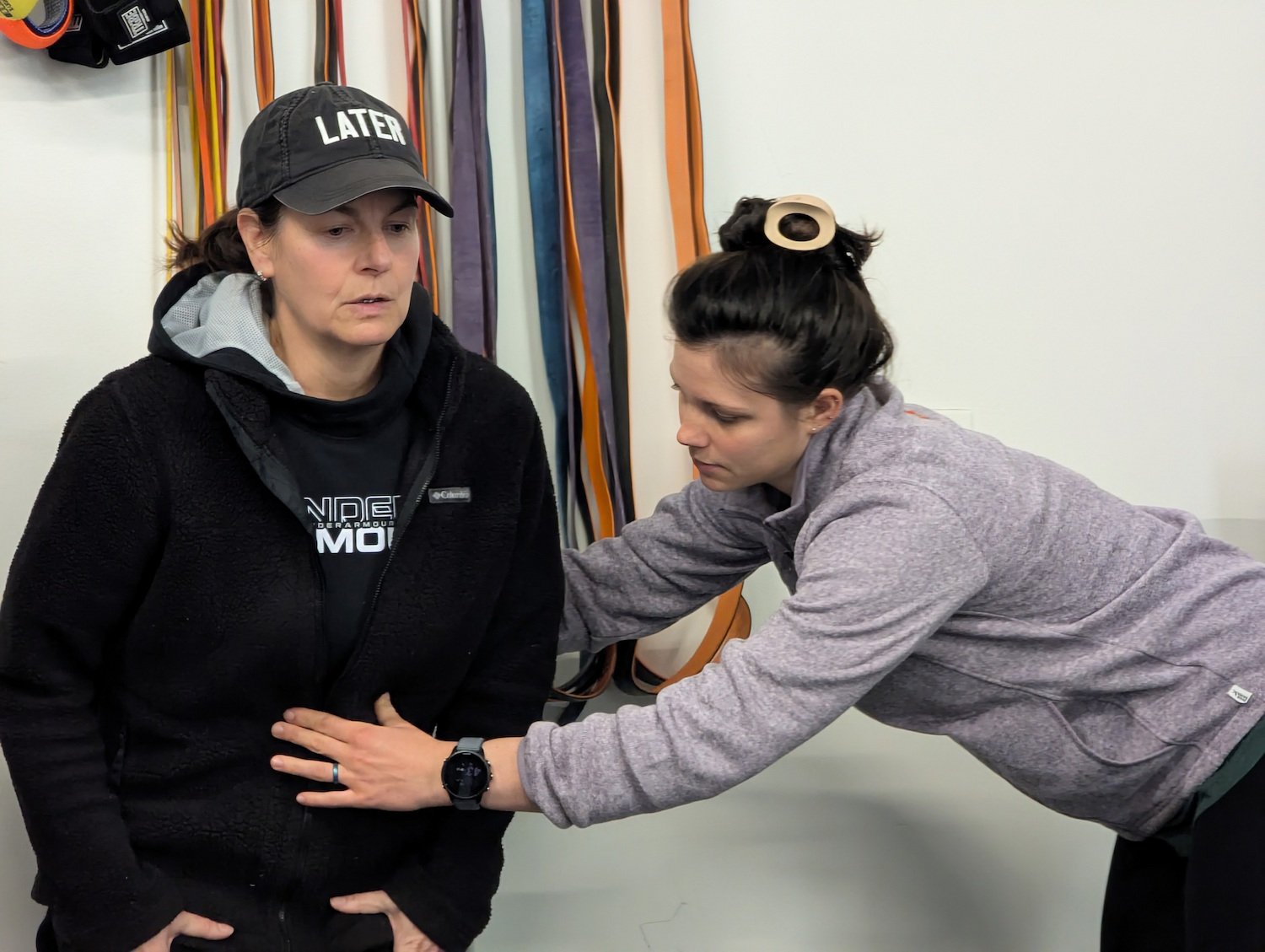
The first step is to find the root cause. As mentioned, there can be many drivers of pelvic pain. Is it a compressed nerve? An overactive pelvic floor? A weaker pelvic floor? Is it coming from the back or hip? This is where a full pelvic floor and movement assessment helps tease out the driver (or drivers) of pain.
The second step is to fix the issue. Depending on the driver and aggravating factors, this looks a little different from person to person. But the overall goal is to address limitations to restore coordination and control of the pelvic floor and surrounding tissues. It also helps to strengthen the muscles around the hips, legs, back, and core to improve movement patterns, support, and stability throughout the system. Decreasing the strain through the pelvis that may be contributing to pain.
The third step is to perform and prevent. By working on irritable tissues, mobility, and strength, the body builds resilience. The goal is to continue building that resilience while gradually returning to activity, getting people back to their training, activities, and daily life without living in fear of movement or pain.
Exercises That Help
Here are some exercises to get started. Regardless of the driver, these can help:
Breathing
Breathing can improve awareness of the pelvic floor, support down-training, and build coordination between the pelvic floor and breath. Any position works, but some favorites are happy baby, child's pose, or a supported squat. Breathe in like you're smelling roses, and out like you're trying to flicker a candle flame (not blow it out!). Don't force air into the belly or down toward the pelvic floor. Just let things move and notice what you feel. Over time, work toward allowing movement in the low belly and pelvic floor without force.
Pelvic Floor Coordination Work
This involves practicing pelvic floor contractions during increases in intra-abdominal pressure. I tend to start with the Pallof press, which requires some core recruitment without overwhelming people into co-contracting larger muscle groups (core, adductors, glutes). Perform a pelvic floor contraction, then move the hands out (the band should feel like it's trying to rotate you). Bring the band back to the chest, then fully release the pelvic floor contraction. If you're not able to reach full resting length of the pelvic floor, try pairing this with a belly breath after the contraction.
Hip Mobility and Strength
This is highly dependent on the person and their limitations, but areas to address often include hip extension (glute) strengthening, hip abduction, hip external rotation, and sometimes hip flexion. For mobility, focus on hip rotation (internal and/or external) and hip extension.
Some example exercises include:
Pigeon Pose
Couch Stretch
Glute Bridges
Hip Thursts
Clamshells
Side Plank Hip Abduction
Eccentric Hip Flexor Strengthening
Core Stability Exercises
Again, the specifics depend on the person and their limitations. A good starting point is supine marches, progressing (quickly or slowly) to planks, side planks, wall walks, overhead pressing, and more.
Summary
Pelvic pain can present in a variety of ways and is more common than you think. People often just don't talk about it because it can feel personal. The good news is that it's treatable!
The key is not to just rest or avoid activity. When addressing pelvic pain, a full-body approach is essential both to improve symptoms and to keep them away when returning to activity.
You can return to the activities you enjoy!
Where to Find a Pelvic Health Physical Therapist That Can Help You With Pelvic Pain
Look for someone who specializes in pelvic health and works with active populations. A good sign is if they have weights heavier than 50 lbs in the clinic, and ideally they have experience working with active populations.
Starting with table-based exercises is great! It builds a strong foundation. But depending on your goals and the activities you want to return to, you shouldn't stay there forever.
At Infinite Capacity Physical Therapy, we help athletes and active adults manage pain and pelvic symptoms so they can continue training and living active lives. We'd love to help you get back to your activities without pelvic pain holding you back!
Schedule a FREE Discovery Call today to start your journey to pain-free activity!
Next On Your Reading List