Tommy John Recovery Time: What a Physical Therapist Wants You to Know
By Dr. Nick Whittaker
A Tommy John injury is one of the most feared diagnoses in baseball. Whether you're a pitcher, catcher, or position player, hearing that you may need Tommy John surgery can feel overwhelming.
One of the biggest challenges for athletes is understanding what recovery actually looks like. Many players hear stories about professional athletes returning in a year and assume they'll follow the same timeline. Others become frustrated when progress feels slower than expected.
The reality is that Tommy John recovery is a long process that requires patience, consistency, and a structured rehabilitation plan. While surgery repairs the ligament, successful return to play depends heavily on the quality of rehabilitation that follows.
Typical Tommy John Recovery Timeline
Every athlete recovers at a different pace, but most follow a similar progression after surgery.
Surgery and Early Healing Phase (0-3 Months)
The initial focus is protecting the surgical repair while restoring basic motion and reducing pain.
During this phase, rehabilitation focuses on:
Managing pain and swelling
Gradually restoring elbow range of motion
Protecting the healing ligament
Maintaining shoulder, wrist, and hand function
Preserving lower body strength when appropriate
Many athletes feel good relatively quickly, but the ligament is still healing and vulnerable during this stage.
Progressive Strengthening Phase (3-9 Months)
Once healing milestones are achieved, strengthening becomes the primary focus.
This phase typically includes:
Rotator cuff strengthening
Scapular stabilization exercises
Forearm and grip strengthening
Core training
Lower body strength development
Power and athletic movement progressions
This is often where athletes build the physical foundation needed for a successful return to throwing.
Throwing Progression Phase (9-15 Months)
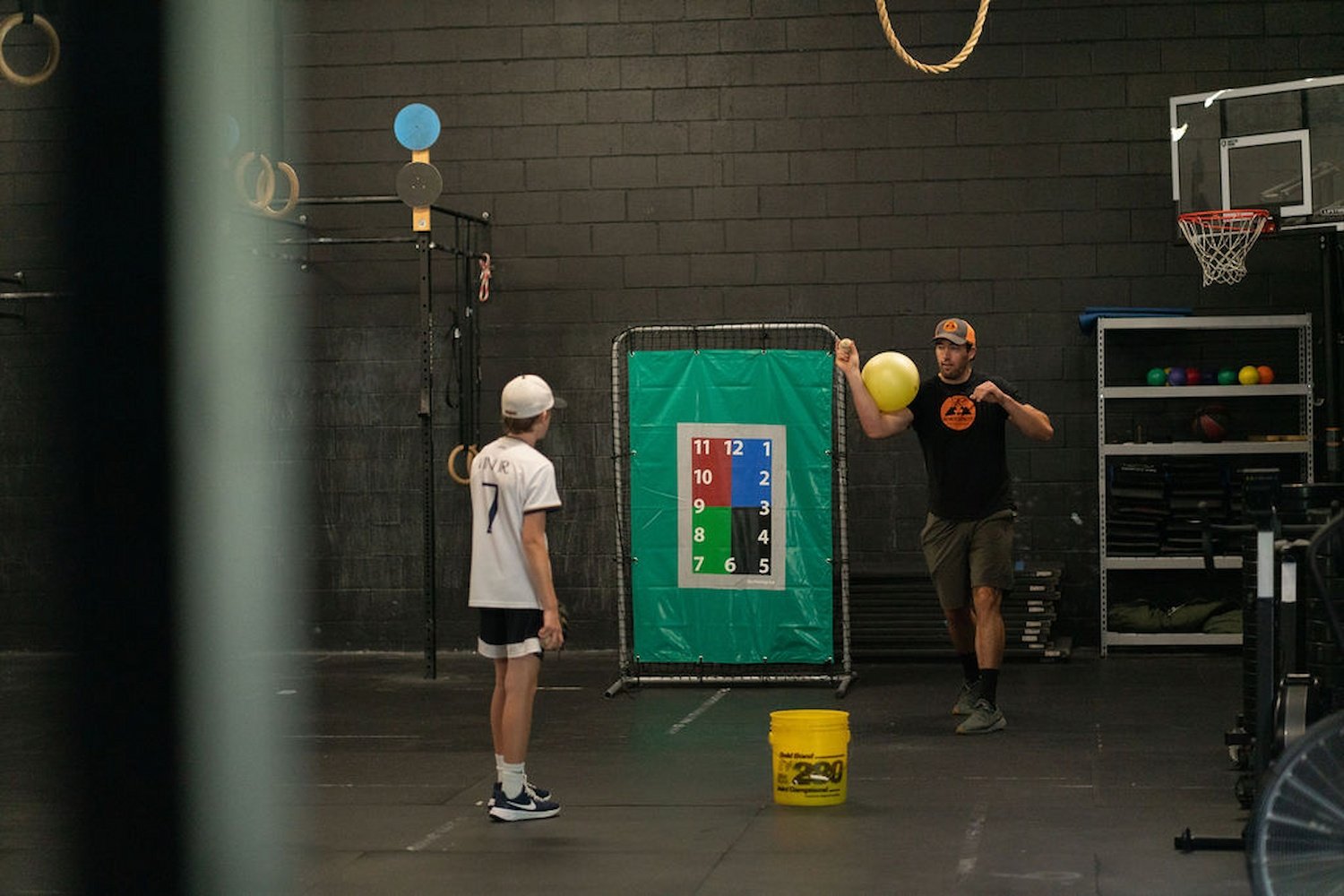
A structured return-to-throwing program is introduced once strength, mobility, and movement quality meet specific criteria.
Throwing progression typically starts with:
Light toss
Gradual increases in throwing volume
Progressive increase in throwing distance
Position-specific drills
Bullpen sessions for pitchers
It’s important to note that progression through the throwing program should be based on objective criteria rather than arbitrary timelines.
Full Return to Competition (12-18+ Months)
Most athletes require at least 12 to 18 months before returning to full competitive baseball.
Professional pitchers often require even longer to regain previous levels of velocity, command, and workload tolerance.
Returning to competition does not mean the recovery process is complete. Ongoing strength training, arm care, and workload management remain critical long after returning to play.
Factors That Affect Recovery Time
Not every athlete recovers at the same speed. Several factors can influence the timeline. This includes:
Age and Level of Play
Younger athletes often heal well but may require additional time to rebuild strength and throwing capacity. Higher-level athletes may have access to more resources but also place greater demands on the elbow.
Quality of Rehabilitation
A well-designed rehabilitation program helps athletes progress safely while minimizing setbacks. Missing key phases of recovery can delay progress and increase reinjury risk.
Adherence to the Throwing Program
One of the most important predictors of success is consistency. Athletes who follow their throwing progression and recovery guidelines tend to experience smoother returns to play.
Addressing Underlying Mechanics
The surgery repairs the ligament, but it does not automatically fix the reason the injury occurred. Poor throwing mechanics, mobility restrictions, strength deficits, and workload management issues must all be addressed to reduce future injury risk.
Common Mistakes During Recovery
Rushing the Throwing Progression
Athletes often feel good before the ligament is fully prepared for high-level throwing demands. Trying to advance too quickly can lead to setbacks and prolonged recovery.
Skipping Strength Phases
Throwing is only one piece of recovery. Without rebuilding strength throughout the shoulder, trunk, hips, and lower body, athletes may return to play with the same deficits that contributed to the injury.
Ignoring Whole-Body Deficits
Tommy John injuries are rarely just elbow problems. Deficits in hip mobility, thoracic rotation, core control, and lower body strength can all contribute to excessive stress on the elbow.
Comparing Your Timeline to Others
Every athlete recovers differently. Comparing yourself to professional athletes or teammates can create unrealistic expectations and unnecessary frustration. Focus on your own progress and objective milestones rather than someone else's timeline.
How to Optimize Tommy John Recovery
Step 1: Find the Root Cause
A successful recovery starts by identifying why the injury happened.
This may involve evaluating:
Throwing mechanics
Shoulder mobility
Thoracic mobility
Hip mobility
Strength deficits
Training volume
Recovery habits
Understanding the cause helps reduce the likelihood of future injury.
Step 2: Fix the Issue
Once problem areas are identified, rehabilitation should focus on restoring:
Elbow function
Shoulder strength
Scapular control
Core stability
Lower body strength
Movement efficiency
The goal isn't simply to return to baseline—it's to build a more durable athlete.
Step 3: Perform and Prevent
The final phase is preparing the athlete for the demands of competition.
This includes:
Structured throwing progressions
Position-specific training
Strength and power development
Workload management
Ongoing injury prevention strategies
The athletes who return most successfully are typically those who continue training after they are cleared to play.
Summary
Tommy John recovery is a long process, but it is manageable with the right plan.
While timelines vary between athletes, successful outcomes typically depend on patience, consistency, and a structured progression through each phase of rehabilitation.
Rushing the process can increase the risk of reinjury, while addressing the underlying causes of the injury can improve long-term durability and performance.
The goal isn't simply to return to throwing, it's to return stronger, more efficient, and better prepared for the demands of baseball.
Where to find a baseball physical therapist who can help you with Tommy John Recovery (and one who understands your needs and training demands)
Recovering from Tommy John surgery requires more than standard rehabilitation. When choosing a sports physical therapist, look for someone who has:
Experience treating post-surgical throwing athletes
Knowledge of return-to-throwing progressions
An understanding of baseball mechanics
Communication with surgeons, coaches, and strength coaches
A performance-focused rehabilitation approach
The best rehabilitation programs bridge the gap between injury recovery and athletic performance.
At Infinite Capacity Physical Therapy, we help baseball athletes navigate every stage of Tommy John rehabilitation—from post-surgical recovery to return-to-throwing and performance training.
If you're recovering from Tommy John surgery or dealing with elbow pain, our team can help build a personalized plan that gets you back on the field safely and confidently. Start your way back to the mound by booking a FREE discovery call.
Next on Your Reading List…